
Review of Woman of the Hour by Claire Polders
By Lucy Zhang
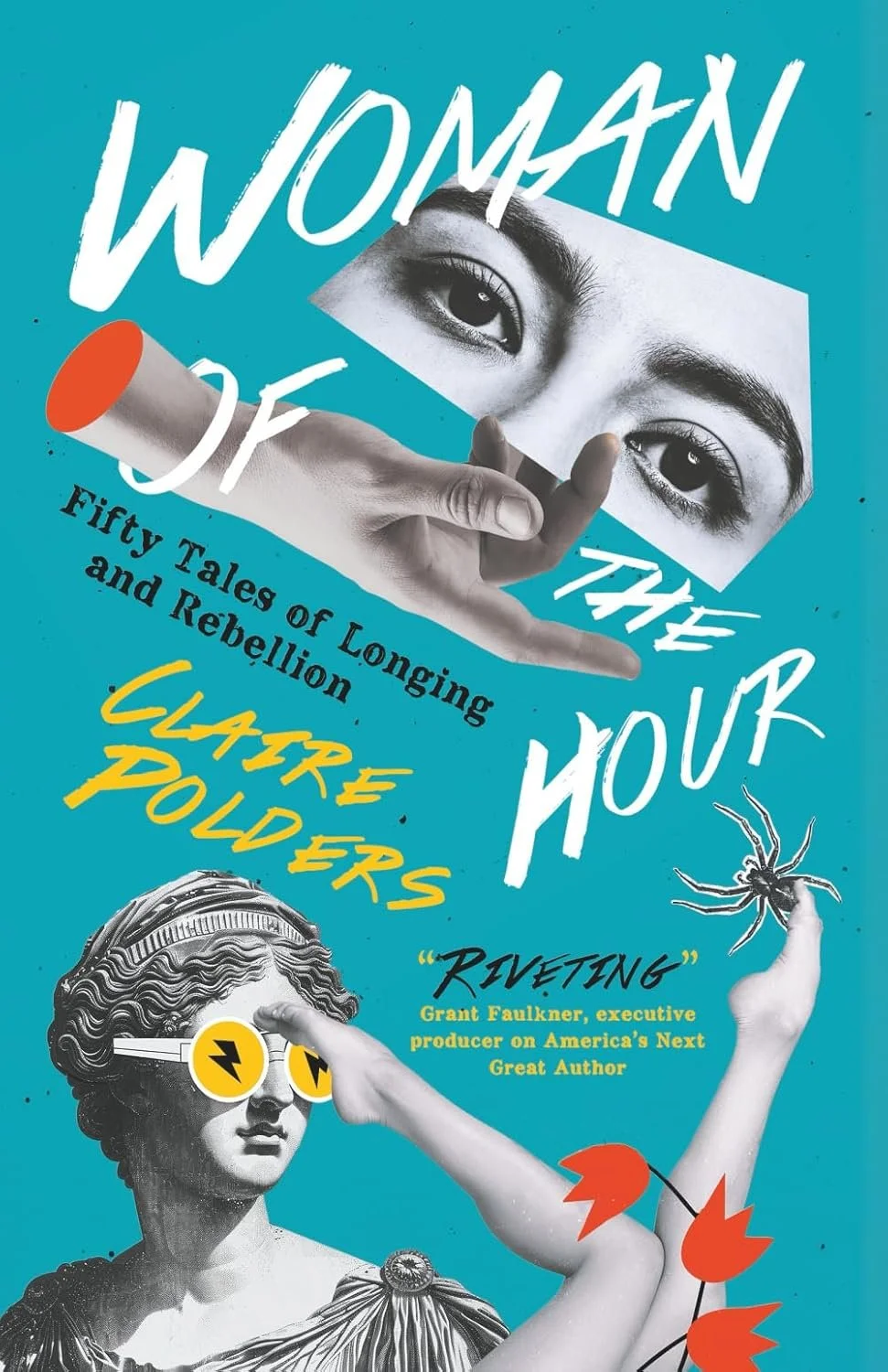
Brave yet cowardly. Confident yet powerless. Gentle yet violent. The characters in Claire Polders’s Woman of the Hour embody contradictions that cut like blades, exposing the sharp dichotomies of womanhood. Across fifty flash fictions, Polders moves from dystopian landscapes where girls must relinquish their dreams, to the intimate crisis of a surgeon mother questioning her ambitions. Each piece introduces its own “woman of the hour”—a figure simultaneously marginalized and centered, a paradox that underscores the collection’s irony and force.
Reading these stories feels like listening to a quiet scream that slowly embeds itself in your consciousness. An accomplished surgeon is torn between career and family; a woman fends off unwanted advances at a dinner party; a 39-year-old reaches for a love she never knew; a sensual snail enthusiast refuses to compromise her eccentric desires. Whether seasoned or naïve, decorated or overlooked, these narrators resist their molds—sometimes subtly, sometimes defiantly—yet always with a voice that demands attention.
One of the most striking pieces, “Bleeding Girls Initiation Ritual,” both whispers and roars against the confines imposed on young women. In this dystopian tale, girls are forced to surrender their dreams—first symbolized by keepsakes, then by their very eyes—into a fire pit. The immediate threat of gouging out their eyes ignites rebellion. Though the girls are nameless, speaking in a collective “we,” their sacrificed dreams reveal individuality. By the story’s end, they reclaim their identities—“We are Saraswati and Antigone and Scheherazade and Joan and Cleopatra and Eve. And we are Fatima and Jing and Camille and Alysha and Maryam and Tamar and Lex.” In contrast, the men remain faceless archetypes—“Leader,” “Bully,” “Boy”—mere shadows of oppression. The girls’ defiance crystallizes into a power rooted in community, individuality, and resistance.
Woman of the Hour challenges assumptions with brevity and precision, confronting both societal barriers and inner conflicts. The flashes converse with one another, layering meaning as the collection progresses. This dialogue culminates in the final story, “Looking for a Place to Die.” Despite its bleak title, the piece exudes defiant hope. It draws on earlier stories while projecting forward, envisioning a future where these women not only survive but also thrive. The collection closes in resilience—a note of hope that lingers long after the last page.

Lucy Zhang: See masthead